By Chris Canetti, President, FIFA World Cup 2026TM Houston Host Committee
Having lived and worked in Houston for two decades, watching the city I call home welcome more than one million fans across seven matches and our FIFA Fan FestivalTM was unforgettable. When we set out to host the FIFA World Cup 2026TM, we knew it would create a once-in-a-generation event. From the outset of our bid, however, we believed success could not be measured solely by stadium attendance or economic impact. Our ambition was to use the FIFA World Cup to raise the bar for Growing the Game, Defending Human Rights and Protecting the Environment.
Meaningful impact begins with listening, and it was inspiring seeing our community step forward. Years before the first match kicked off at Reliant Stadium, we engaged over 1,600 residents and stakeholders across 240 organizations to shape our Sustainability and Human Rights Action Plans. That collaborative approach earned praise from FIFA ahead of the tournament, which praised Houston as one of the most well-prepared host cities and commended our community legacy, translating into measurable action.
On the environmental front, we powered 100% of the FIFA Fan FestivalTM with renewable wind energy and limited direct emissions to 15 metric tons of carbon dioxide equivalent. Through community partnerships, we helped plant roughly 8,000 trees across Greater Houston, hosted 22 bayou clean-ups, and achieved a 66% waste diversion rate at the Fan Festival, four times Houston’s household average. Crucially, 22% of discarded materials were repurposed directly into the community, including over 154,000 square feet of turf donated to local parks, animal rescues, and youth clubs, and over 4,300 kilograms of rescued food.
Equally vital was safeguarding the people behind this tournament. We established a tournament-wide $15 per hour minimum wage, over double the federal rate, and launched a Worker Support Hub, resulting in an 84% worker satisfaction rate. We also embedded human rights expectations into our contracting process and worked with local housing stakeholders to help ensure the event did not displace or criminalize unsheltered residents. At the Fan Festival, we provided over 20 accessibility integrations and multi-faith prayer rooms to make every guest feel welcome.
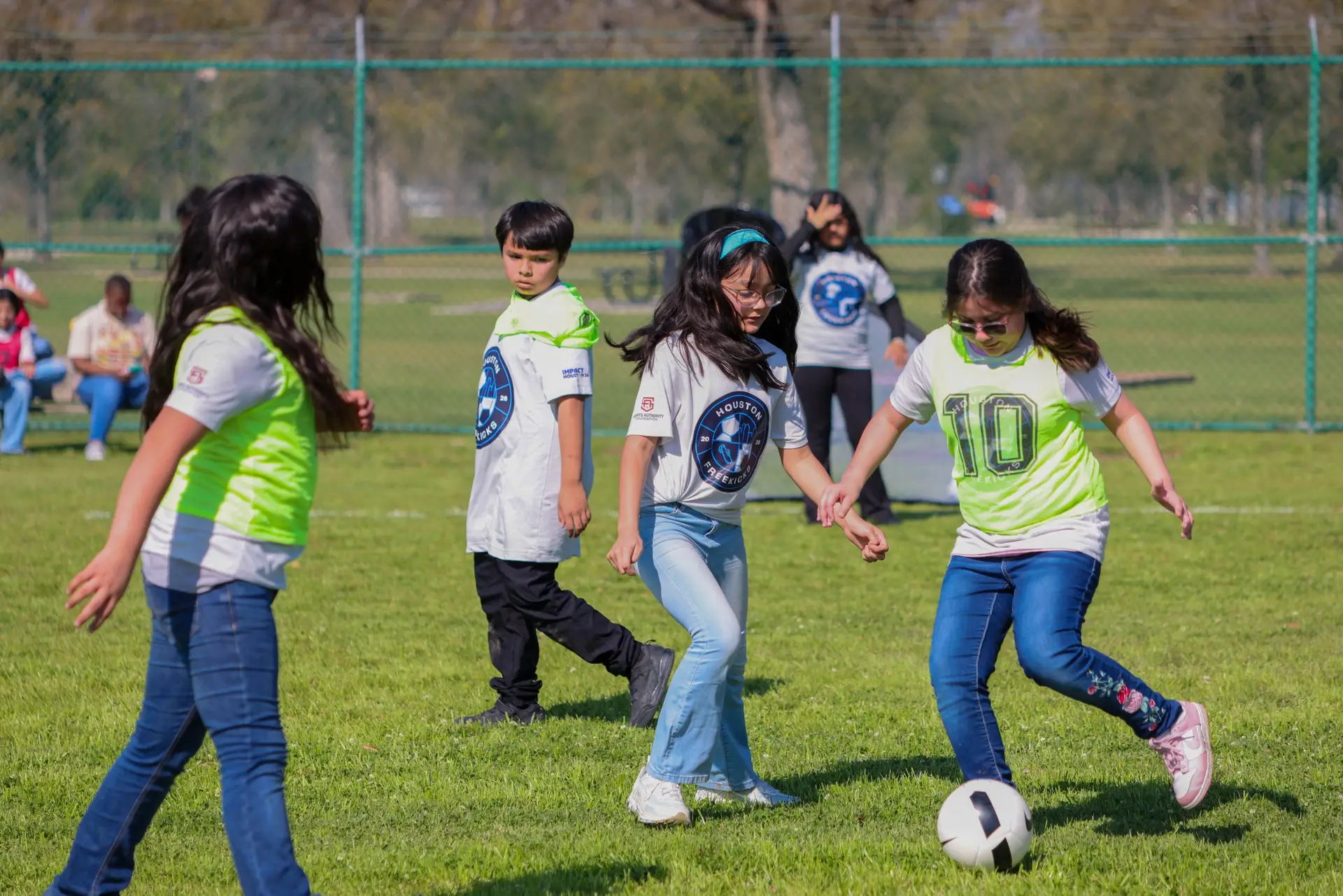
For me, living in Houston, our proudest achievement is what remains now the matches are over. Through Impact Houston 26’s flagship initiative, FREEKICKS Soccer, local clubs are investing $1.5 million to grow the game, including over 1,200 annual scholarships to young people in underserved neighborhoods, while all four Harris County Precincts are investing to build and refurbish 23 pitches across County parks.
Hosting fans from around the world carries immense responsibility. By publishing our Sustainability & Human Rights Report, sharing verified data, candid lessons, and practical toolkits openly, we hope Houston’s framework can inspire future host cities in turning a summer of sport into a lasting legacy.