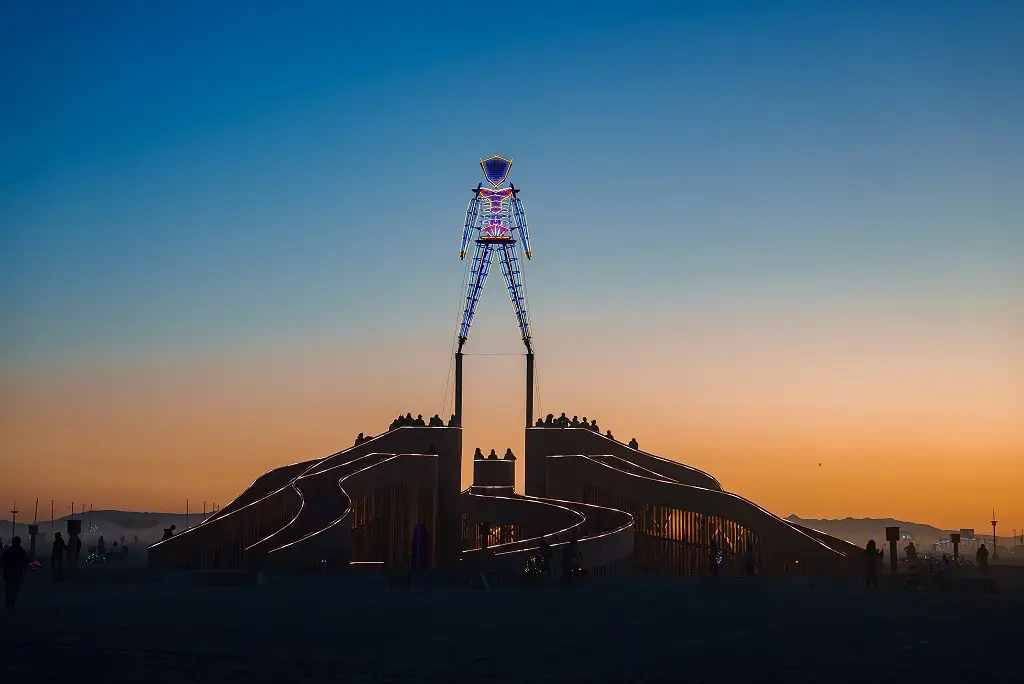
Burning Man may be unlike almost any other major event, but many of the challenges it faces will be familiar to event organisers and host cities around the world. Challenges such as how to create a genuine sense of community, build positive relationships with local people, prepare for unpredictable weather and understand the role of technology in bringing people together.
Ahead of her appearance at Host City 2026 in Glasgow, Burning Man CEO and Founding Board Member Marian Goodell spoke to Host City’s Marc Webber about the lessons learned from an event that has grown from from a handful of participants in 1986 to more than 60,000 today.
At the heart of Burning Man, Goodell says, is participation. Black Rock City is deliberately designed to encourage interaction rather than passive consumption. There are no commercial sponsors and almost nothing to buy. Participants are expected to bring what they need and take responsibility for the environment around them.
This offers a lesson that can extend well beyond Burning Man, says Goodell. Even large commercial events can think more deliberately about how they encourage people to interact, play and feel part of something rather than simply move through an event as spectators.
“If we want to have a sense of loyalty towards our gatherings and towards our events, I think we have an opportunity to really look at them as communities, as people coming together.”
One striking example is waste. Despite bringing around 60,000 people together in a temporary city for eight days, Burning Man provides no rubbish bins and has no volunteers walking around collecting waste. Instead, participants arrive knowing that they are responsible for what they bring with them.
That sense of collective responsibility has also proved important when things go wrong. Extreme heat and heavy rain have tested Black Rock City in recent years, forcing the organisation to rethink contingency planning around essential infrastructure.
But when heavy rain hit the event in 2023, Goodell says one of the strongest responses came from the community itself. Participants shared food and shelter, took in strangers and helped solve problems within their own neighbourhoods while organisers concentrated on critical infrastructure.
“The best stories of the first lesson of 2023 was that we have created a community that’s resilient. It’s a community of can do.”
Burning Man’s relationship with its host community has developed over decades too. The organisation has invested in local initiatives, provided internet connectivity and created opportunities for residents to experience the event. Goodell stresses the importance of listening rather than deciding what a community needs on its behalf.
With around 80 affiliated Burning Man events now taking place internationally, she also sees growing potential in smaller, locally rooted gatherings. The common thread is not their scale, but their ability to create meaningful connections between people.
That role is ever more important as technology occupies a greater part of everyday life. Events have a distinctive value precisely because they provide something digital experiences cannot fully replicate, Goodell says. Being physically present with other people.
“Technology is with us now. But let’s be the analogue to technology and be a partner in it and use it when we need it, but know that human to human is still the most powerful.”
Goodell will continue the conversation at Host City 2026 in Glasgow on 1–2 December, joining international leaders from across the events industry to explore how major events can create stronger connections between people, places and communities.