From the moment we wake up, technologies bridge our physical life with one that is digital. In a paper published in July 2024, Dr. Matt Frew from the School of Business and Enterprise at the University of the West of Scotland, stated that “emerging DARQ[1] technologies and an accelerating Metaverse are reshaping the event landscape, birthing a new era of extended reality events.” How DARQ is the future of events?
These are times of high uncertainty on many fronts, also for the events industry. During the AIPC Academy in Brussels it was one of the key areas for discussion during coffee-breaks and lunches. One thing is very clear however: technology will continue to become more important for the event industry and we will need to understand the change that comes with it.
Therefore, it is important to take a step back and read papers like the one published by Dr. Frew, as they provide a broader view on event trends, which allows us to focus on what is really important. While the title of his paper seems alarming, the content is far less so. Events indeed reflect wide changes happening in society – including technology – and should be considered as portals of transition. The technology-driven events we see today have little to do with the informal gatherings which are at the start of our industry. At the same time, the very basis has not changed: it is about bringing communities together.
What is new, however, is the acceleration of technologies, combined with the blend between physical and digital. As a result, communities now gather on a continuous basis in different environments, using different types of technology, including brain-computer interfaces.
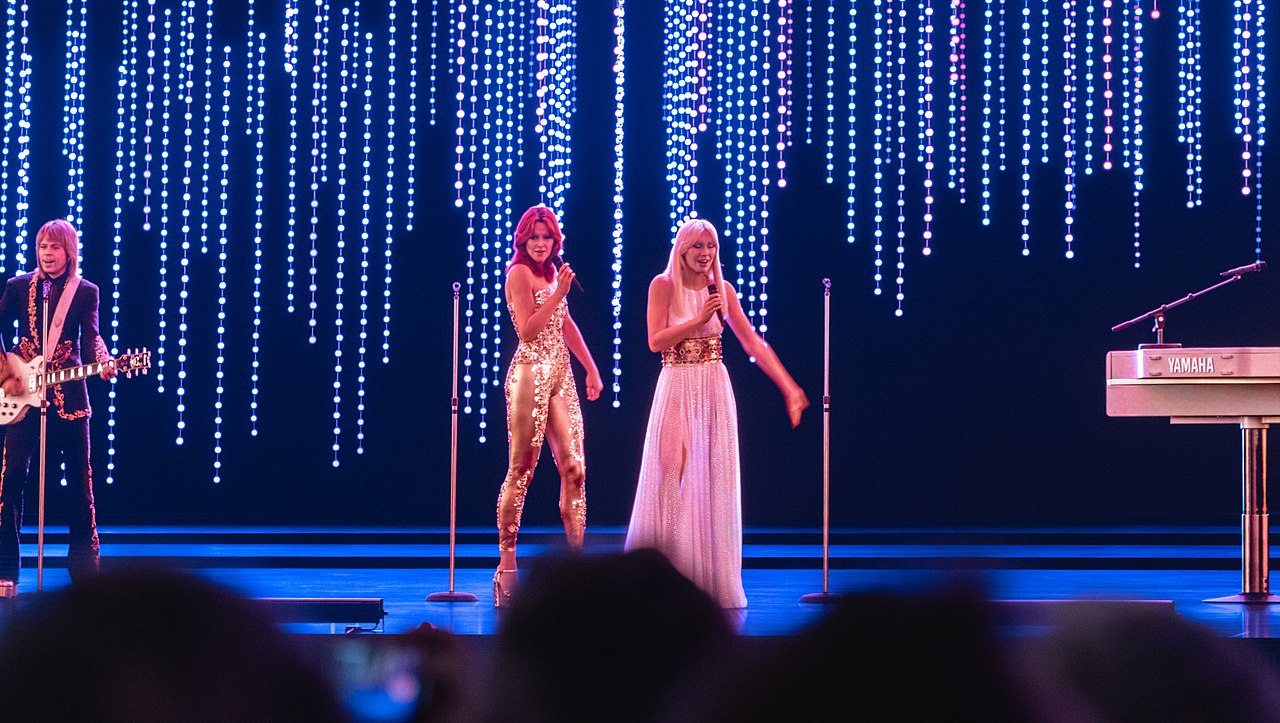
Going forward, it is expected we’ll see more of these “blends”. Take the ABBA Voyage tour as an example, which is basically bringing together large crowds to watch the younger version of the band in the shape of avatars, and with the event experience being extended via followers and influencers to improve reach and turn involvement of the event community into revenue. Over a 12-month period, the show completed 374 performances and attracted 1,097,597 visitors, achieving an occupancy rate of 97.8%. Revenue from ticket sales was £103,665,597. And that’s just the tickets.
So next to the traditional live events and the cloned hybrid events, we’ll also need to consider extended reality events going forward. The challenge for the event industry will be to fully understand the potential these evolutions can bring and to decide accordingly on the technology investment to be done.
All of this will of course not happen overnight, but given the speed at which our physical and digital lives become intertwined, this new reality will be there sooner than later, making the debate between “live events” and “digital events” an obsolete one. They will not co-exist – they will become one, allowing for new models of engagement and community building. So the future is definitely not dark.
[1] *(Distributed Ledger Systems, Artificial Intelligence, Virtual, Augmented, Mixed to Extended Reality,
Quantum Computing)